How to Make AI Music for Free in 2026 (Suno Guide)
Make a song with Suno using a clear brief, original lyrics and practical prompt examples. Learn what free generation includes, why downloads are separate, and which permissions to check before using the music in a video or commercial project.

- 1Suno's free plan supports limited generation and listening, not unlimited downloads or commercial use.
- 2A short brief, specific prompts and original lyrics make it easier to evaluate and revise candidate songs; results are not guaranteed.
- 3Check download eligibility, commercial-use terms, third-party permissions and human-authored copyright separately before publishing.
You can make AI music for free by opening Suno, choosing its free model, and describing a song or supplying your own lyrics. You can listen to the results within the free creation allowance. Downloading the recording and using it commercially are separate permissions, however: a free song is not automatically a free MP3 or a copyright-free soundtrack.
This guide walks through one manageable project: a short song with vocals or an instrumental for a creator project. It includes copyable prompts, an original lyric example, a credit-saving revision method, and the checks needed before using the audio outside the app. For the wider writing, design and publishing workflow, see our AI content creation toolkit.
Checked September 28, 2026: product details below come from the linked official pricing pages, help articles and terms. Prompts are illustrative starting points, not results from an audio-quality benchmark. Queue times and musical results vary. The rights discussion is general information, not legal advice.
What Is Actually Free in an AI Music Generator
Start with the outcome you need, not the word "free" on a landing page. Generating an idea, obtaining an audio file, and licensing that file for a client are different tasks.
| What you want | Current Suno free-plan position | Practical consequence |
|---|---|---|
| Generate and listen to a song | v6-mini and 50 credits per day | Enough for limited experiments, not unlimited creation |
| Use your own lyrics | Custom mode accepts lyrics | Supply original writing or material you have permission to use |
| Download an MP3 | No monthly download allocation; trial eligibility varies | Check the download balance in your account first |
| Monetize the recording | Free/trial use is non-commercial | Verify eligible paid download rights and all other permissions |
| Separate vocals and instruments | Get Stems requires Pro or Premier | Not a step required for this free beginner workflow |
These distinctions are documented on Suno's pricing page and its download-policy page. The download guidance has an inconsistency discussed below, so do not sign up assuming you will receive seven exports.
What about Udio? Its help center documents a free generation allowance, but its UMG partnership notice, checked for this guide, says audio, video and stem downloads are disabled. It may suit experimenting inside the service; it is not a dependable alternative when your immediate requirement is an exported soundtrack. This is why the walkthrough focuses on Suno rather than presenting an untested "best tools" ranking.
Step 1: Write a Small Music Brief
Before spending credits, decide whether you want a standalone song, background music, or spoken narration. A track under a tutorial needs space for speech; a song meant to be listened to on its own needs a memorable vocal part. Trying to get both from one prompt often creates conflicting instructions.
For example, a creator brief could be: "A calm instrumental beneath a two-minute desk-setup video, with soft percussion and no dramatic changes." A podcast brief could be: "A short, welcoming intro that ends cleanly before the host starts speaking." Our YouTube creator tools guide and podcast AI toolkit explain the surrounding production tasks.
Record five decisions: purpose, genre, mood, vocal choice, and approximate length. A beginner does not need music theory to make these choices. Tempo, expressed in beats per minute, is useful direction, but a requested BPM or duration is not a precision guarantee from a generative model.
Step 2: Open Suno and Choose the Right Mode
Go to the official Suno Create page, sign in or create an account, and check that the selected model is included in your plan. Suno's v6 FAQ identifies v6-mini as the free model; v6 and v6-wild require Pro or Premier. Tutorials showing older model names may no longer match the current interface.
Choose Simple to describe the result in plain language. Choose Custom when you want to supply your own lyrics and separate musical direction from the words being sung. The official Simple mode instructions confirm the description-first route. Interface labels may differ slightly between web and mobile.
If your actual goal is someone reading a script, use narration software instead of a song generator. Our AI voice generator guide and free text-to-speech comparison cover that separate task. A singing model is not a reliable substitute for precise spoken narration.
Step 3: Use a Specific Prompt, Not a Long One
A useful prompt combines genre + mood + instruments + tempo direction + vocal choice + structure. More words are not automatically better. "Sparse acoustic song" and "huge orchestral wall of sound" pull in different directions, even if each phrase sounds impressive alone.
Compare "make a happy song" with this more actionable starting point:
Upbeat indie pop about finishing a difficult project. Warm, relieved mood. Clean electric guitar, soft bass and light drums. Around 110 BPM. Clear lead vocal, short verses, a repeated chorus and a gentle ending. No crowd noise.
The point is to describe audible qualities rather than request a famous person's identity. Our prompt engineering guide explains the same principle of giving a model a clear task and useful constraints.
Three More Prompt Examples to Adapt
Background music for a tutorial:
Instrumental lo-fi groove for a calm desk-setup tutorial. Soft electric piano, rounded bass and restrained drums, around 80 BPM. Steady energy, no vocals or spoken words, no dramatic drop. Leave space for narration.
A short podcast intro concept:
Instrumental intro for a friendly technology podcast. Warm synthesizer chord, light percussion and a simple rising motif. Brief opening with a clear ending, not a long build. No vocals. Modern and welcoming rather than cinematic.
A song using your own lyrics:
Acoustic folk-pop with a close, clear lead vocal. Fingerpicked guitar, subtle bass and light brushed percussion. Reflective verses and a hopeful chorus. Moderate tempo. Prioritize understandable words over elaborate vocal runs.
Use these as alternative briefs, not one combined prompt. The model may ignore a negative instruction or a requested ending. If that happens, simplify the instruction and evaluate the next version rather than adding ten more constraints. An exact ten-second advertising sting, for instance, may need editing after you obtain an authorized download.
Step 4: Add Your Own Lyrics in Custom Mode
Suno's own-lyrics instructions describe Create → Custom → lyrics field. Put the words there and keep production instructions in the musical-description field. Start with a short verse and chorus instead of spending your first attempts on a long story.
Here is a short original example written for this guide. Section labels are arrangement cues, not a promise of exact phrasing:
[Verse] The last bus leaves a line of light I fold my notes against the night
[Chorus] One small step, then one step more A brighter room beyond this door
Read your lines aloud. If you run out of breath halfway through a line, shorten it. Repeat a chorus phrase intentionally; remove repetition that adds nothing. A concrete image often gives the song more character than a string of abstract words such as "dreams," "destiny" and "forever."
You can use ChatGPT for brainstorming: ask for alternate rhymes, a tighter line, or feedback on a verse. The music generator still produces the audio. Do not paste copyrighted lyrics you lack permission to use, confidential client material, or someone else's voice recording. Writing lyrics yourself also does not automatically grant commercial rights to the resulting AI recording.
Step 5: Compare Takes Without Wasting Credits
Generate once, then listen to both returned versions. Suno currently documents a standard generation as two songs for ten credits. With the free plan's fifty daily credits, that would allow five ordinary generation requests, producing ten candidate songs, if you spend the whole allowance on those requests. More expensive settings or other credit-consuming operations reduce that number.
Do not immediately regenerate because the opening is imperfect. Listen through the chorus and ending, then write one useful note: "vocal is unclear," "drums overpower the voice," or "ending cuts off." Change one part of the brief for the next attempt so you can tell what you were trying to improve.
A simple comparison checklist is enough:
- Are the important words understandable?
- Does the energy match the intended video or listening context?
- Is there an obvious click, distortion, unexpected voice, or abrupt transition?
- Does the ending leave a usable stopping point?
- Would the track distract from a narrator?
Save the preferred version and its prompt. These are listening judgments, not an AI-authenticity test. Exact reproducibility is not guaranteed, and a more detailed prompt cannot remove every artifact. Stop when further attempts are not addressing a specific problem.
Step 6: Check Download Eligibility Before Exporting
Open Library or Workspace → More Actions (…) → Download, following Suno's download instructions. Available formats depend on the plan, song and device. Its format guide lists MP3 across plans where a download is allowed, while WAV is a Pro/Premier option on the web.
The important catch is entitlement, not the file format. The pricing page lists no monthly song downloads on Free. The dated September download-policy announcement says accounts created before September 3, 2026 received up to seven lifetime trial downloads; newer free accounts may occasionally receive trials. A newer help article uses broader wording: each free account includes up to seven lifetime trial downloads.
Those pages are not fully consistent. Check your own available download balance rather than assuming seven downloads are guaranteed. Both agree that trial downloads are personal and non-commercial, and they do not reset monthly. Pro currently includes twenty monthly song downloads and Premier sixty, with a separate Studio-workflow exception.
If you have no eligible download, Suno's trial-download FAQ confirms you can still listen to and share your songs within the service. You can also choose another appropriately licensed source for your project. Do not use a third-party ripper or record the playback to bypass the limit: Suno's terms prohibit obtaining copies outside its approved download channels.
Optional Paid Finishing: Stems and Section Editing
Stems are separate audio parts such as vocals, drums and bass. They let you lower an instrument or work on a vocal without changing the entire mix. Suno's Get Stems documentation says this feature requires Pro or Premier, and extraction can consume additional credits. Suno Studio is included with Premier.
The v6 FAQ also describes editing a section or a lyric through natural-language instructions. Check the feature available to your account before building a workflow around it; the free plan includes standard features, not the complete paid editing suite. If a control is locked, revising a short generation within your allowance is the simpler free option.
Stem separation is useful, but it may leave bleed or artifacts between parts. It cannot reliably repair every mispronounced syllable. Once you have a permitted export, our AI video editing guide covers arranging audio alongside speech and footage. You do not need stems merely to place a licensed background track on a video timeline.
Commercial Use, Copyright and Voice Rights Are Different
A platform license is permission under a contract. Suno's paid-rights help article now describes commercial rights for songs downloaded while subscribed. Its terms effective September 3, 2026 require a permitted download through an approved channel. Having paid at some point, or having a playable song link, is not the same as completing an eligible download.
Check exceptions too. Those terms place a separate non-commercial restriction on the platform's defined Remix feature, even for paying users, unless a separate offering provides otherwise. A subscription does not clear someone else's lyrics, samples or recording rights. For an older free-plan song or a remix, verify the exact track's eligibility instead of assuming a later upgrade solves everything.
Copyright protection is a separate legal question. The U.S. Copyright Office's AI report announcement says protection requires sufficient human-determined expressive elements; merely supplying prompts is not enough. Original human-written lyrics, creative arrangements and modifications can be protectable contributions, but they do not automatically confer copyright over every generated sound. Other jurisdictions may differ. A commercial-use license is not a guarantee of exclusive ownership.
Identity and voice permissions are separate again. Suno's Voice Model terms permit a model of your own voice, not another person's. Describe a genre or vocal quality instead of presenting a track as if a real artist performed or endorsed it. A broad style description is not the same as copying someone's identity, but naming a genre does not clear any copyrighted material you upload.
For a release or client deliverable, keep the song link, creation and download dates, the relevant plan receipt, applicable terms, and permissions for your inputs. These records support your review; they do not guarantee a distributor will accept the recording or that no claim can arise.
Using the Music in a YouTube or Lyric Video
First establish that you may download and use the track for that purpose. Then plan the video around the audio, not around a promise that every AI tool is free.
- Place your permitted audio export on the editing timeline.
- Use your own footage or appropriately licensed visuals. An AI image generator can help create a visual concept, but its terms apply separately.
- For a lyric video, add the actual sung words and check their timing manually. The generated vocal may not match your submitted lyrics exactly.
- Assemble titles and stills using a suitable editor; our Canva AI guide covers that design workflow. If you need moving scenes, compare the limitations in our AI video generator guide before purchasing anything.
- Lower background music beneath speech, check playback on headphones and a phone, and review the final export.
- Follow YouTube's current AI-use disclosure requirements and monetization rules. Disclosure itself is not a promise or a barrier to earnings.
The wider publishing steps are covered in our YouTube channel starter guide. A music license, platform eligibility and audience interest are three different requirements; satisfying one does not satisfy the others.
If you need a free downloadable soundtrack today: consider the YouTube Audio Library. It is a library of existing music, not an AI generator. YouTube documents MP3 downloads and use in monetized videos by eligible Partner Program channels. Check each track's license and give attribution when required. This is an alternative for a video project, not permission to redistribute tracks as your own music catalog.
Common Problems and Sensible Next Steps
| Problem | What to try first |
|---|---|
| Vocals appear in an instrumental | Select the instrumental option where offered, remove lyric-like text, and simplify the prompt |
| Lyrics sound rushed | Shorten lines and reduce the amount of text in each section |
| Track is too busy for narration | Request fewer instruments and steadier energy, then listen under your actual voice track |
| Ending is abrupt | Request a gentle ending; if permitted, trim or fade an authorized export |
| Output ignores the requested tempo | Treat BPM as guidance, simplify competing instructions, and verify the result rather than trusting the prompt |
| Download control is missing or locked | Check plan, trial balance and official policy; do not assume generation credits are download credits |
Frequently Asked Questions
Can I make AI music with vocals for free?
Yes. Suno's free v6-mini model can generate songs with vocals within its credit allowance. Free creation and in-app listening do not guarantee a downloadable file or commercial-use rights.
Can I turn my own lyrics into an AI song?
Yes. Open Suno's Create page, choose Custom, and enter your original lyrics in the lyrics field. Add musical direction separately. You retain rights to your original input lyrics, but the generated recording has its own license conditions.
Does Suno give everyone seven free downloads?
Do not assume so. Its newer trial FAQ says up to seven lifetime downloads, while its dated policy distinguishes accounts created before and after September 3, 2026. Verify your account balance. Trial downloads do not reset monthly and are non-commercial.
Can I use free AI music on a monetized YouTube channel?
Not automatically. Suno free-plan output and trial downloads are non-commercial. For commercial use, check eligible paid download rights, input permissions and the platform's rules. Different music services have different licenses.
Is an AI-generated song copyright-free?
No such blanket conclusion is justified. Copyright protection, a service's contractual restrictions and third-party rights are separate matters. In the United States, prompts alone do not establish human authorship of the generated output.
Can ChatGPT help make the song?
Use it to develop a brief, suggest rhymes or review your lyrics, then use the music generator for the audio in this workflow. Check suggestions yourself rather than assuming every line is original or singable.
Do I need an account or a paid subscription?
This Suno walkthrough requires an account, but not a paid subscription for limited generation and listening. Download eligibility and paid features are separate. It is not a no-sign-up or unlimited-download method.
The Practical Starting Point
Write one short brief, generate a pair of candidates, and revise one specific weakness. Use your own lyrics where possible and check the export rules before committing the track to a project. That gives you a useful way to explore AI music without confusing a free creation allowance with unrestricted rights.
Sources and Image Credits
Primary sources were checked September 28, 2026; plan and policy details can change. Relevant sources are linked beside the claims above, including Suno pricing, the v6 FAQ, Suno terms, Udio's download notice, the U.S. Copyright Office announcement and YouTube Audio Library guidance.
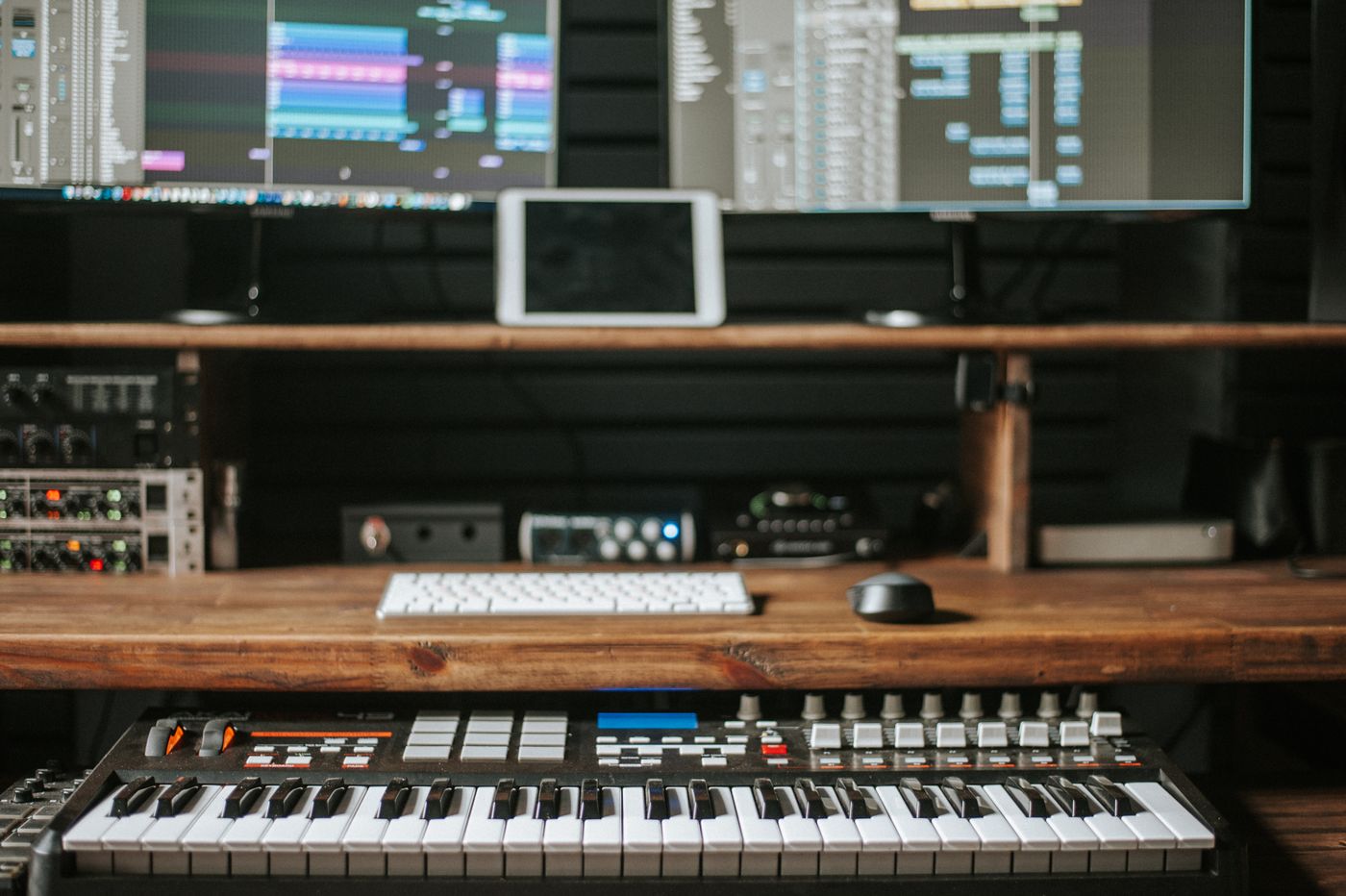
Images are illustrative studio photographs, not screenshots of Suno or evidence of a product test. Photo credits: Bert Christiaens — cover, Anna Pou — producer, Tima Miroshnichenko — microphones, cottonbro studio — mixer and John Taran — studio workspace, via Pexels.
Share this article
Written by
Ali RehmanAuthor at ByteVerse
A Full Stack Developer and Tech Writer specializing in React.js, Next.js, and modern JavaScript, sharing insights on web development, frontend technologies, backend APIs, and scalable applications.
View all posts

