How to Use n8n in 2026: Complete Beginner Guide
A genuine beginner path into n8n: the five concepts that make it click, the official first workflow explained step by step, template safety rules, and your first AI agent with human approval.

- 1n8n clicks once you know five concepts — triggers, nodes, credentials, expressions, executions — and build one real workflow end to end before scaling up.
- 2Start on Cloud (fastest) or free locally via the documented one-line install or Docker; free software still means real hosting, update, and security responsibility.
- 3Add AI gradually: a tight system message, one read-only tool first, and human-in-the-loop approval before any agent action that changes external systems.
n8n has a reputation problem in the best possible sense: everyone says it is powerful, and everyone also says it is "for technical people." Both claims are half true. You do not need to be a developer to use n8n — but you do need someone to explain the five or six ideas the interface assumes you already know. That is what this guide does: a genuine beginner path from "empty canvas" to a working, published workflow, and then to your first AI agent with a safety gate.
Research note: every product fact here was checked against n8n's official documentation and pricing pages on September 15–16, 2026. Steps and prices change; where something is version-dependent, this guide says so instead of pretending it is permanent. Nothing below is a paid placement.
If you are still deciding whether n8n is the right tool at all, read our n8n vs Zapier comparison first — it covers pricing, hosting, and when a simpler tool is honestly the better choice. This guide assumes you have picked n8n and want to actually use it.
What Is n8n, in One Paragraph?
n8n is a workflow automation tool: you connect nodes (small blocks that each do one thing — watch for an event, fetch data, make a decision, send a message) on a visual canvas, and the connected chain becomes a workflow that runs by itself. One complete run of that chain is an execution, which is also the unit n8n Cloud bills on — not the number of steps inside it. That single design decision is why people move complex automations to n8n: a twelve-step workflow that runs once costs one execution.
When should you not use it? If your entire need is "when a form arrives, add a row and send one email," and you value zero setup above all, a hosted point-to-point tool may serve you fine — our automation roadmap helps you decide what deserves automating in the first place. n8n earns its learning curve when workflows have branching logic, data reshaping, custom API calls, or AI steps.
Cloud or Local? Choose Your Starting Point
You can run n8n two ways, and the right choice for your first week is not the same as the right choice forever.
n8n Cloud is the hosted version — nothing to install, and the official docs recommend it for new users. There is a free trial (no credit card for the plan trials listed on the pricing page), and as of mid-September 2026 the displayed paid plans started at $20/month billed annually for 2,500 executions (Starter) and $50/month for 10,000 (Pro). Treat those as dated observations, not quotes.
Self-hosted n8n (Community edition) is free software you run on your own machine or server. On Linux, macOS, or WSL, the docs give a one-line install — curl -fsSL https://get.n8n.io | sh — after which n8n runs at http://localhost:5678. On plain Windows, use Docker or npm instead; if containers are new to you, our Docker beginner guide covers everything this step assumes. Remember the honest caveat from our comparison article: free software is not free operations. A laptop that goes to sleep is not a server, and updates, backups, and credential security become your job. The same mindset applies as running AI models locally — control is real, and so is the maintenance.

The Community edition also has feature boundaries worth knowing before you commit a team to it: projects, workflow/credential sharing, SSO, external secrets, and Git-based version control are paid-plan features. Solo learners rarely miss them; teams do.
Recommendation for your first workflow: use whichever gets you to the canvas fastest — Cloud trial if you want zero friction today, local install if you want free practice forever. The skills transfer completely; both run the same product.
The Five Concepts That Make n8n Click
Learn these before touching the canvas and the interface stops feeling cryptic. All definitions follow n8n's own glossary.
| Concept | What it means | Why beginners get stuck without it |
|---|---|---|
| Trigger node | The special first node that decides when the workflow runs (on a schedule, on a webhook, on an app event) | Workflows without a published trigger only run when you press the button |
| Node | One block that does one job: fetch, transform, decide, send | Trying to do three jobs in one node creates un-debuggable workflows |
| Credential | Stored authentication (API key, OAuth login) that nodes use to act as you | Nodes fail with auth errors until a credential is created and selected |
| Expression | A small piece of JavaScript inside {{ }} that fills a field dynamically from previous nodes' data | Static values work in tests, then break on real data |
| Execution | One complete run of the workflow, visible in the executions list | It is your billing unit on Cloud and your debugging history |
One more that saves hours: data pinning. While building, you can freeze a node's output so you can iterate on later steps without re-calling an API. Production runs ignore pinned data — it is a development convenience, not a cache.
If a Webhook trigger works in testing but fails when connected to an external app, use our n8n webhook troubleshooting guide. It separates test and production URLs, published versions, HTTP methods and routing errors.

Build Your First Workflow, Step by Step
This follows the official beginner tutorial — a weekly solar-flare report — because it teaches every core skill with a free, real API. The point is not solar flares; it is that after this you can build anything shaped like schedule → fetch → decide → deliver.
Step 1: Create the workflow and add a trigger
From the Overview page, select Create Workflow. Then select Add first step and search for Schedule Trigger. Set it to run weekly — for example Monday at 9:00. That is the entire "when."
Step 2: Fetch data with a node and a credential
Add a NASA node from the Schedule Trigger's connector and pick the "Get a DONKI solar flare" operation. In the credential dropdown, choose Create new credential, then generate a free API key from NASA's public API page (it arrives by email) and paste it in. This create-select-save loop is identical for Slack, Google, or any other service — learn it once. Two security habits from day one: never paste keys into node fields directly, and give each service the narrowest key you can — the same principle as everything in our online security checklist.
By default the operation returns 30 days of data. To fetch one week, open the Start date field's Expression tab and use:
{{ $today.minus(7, 'days') }}
That is your first expression — a dynamic value instead of a hardcoded date. Select Execute step and confirm real JSON appears in the output panel. Test every node this way as you go; it is dramatically easier than debugging a whole chain at the end.
Step 3: Add a decision with the If node
Add an If node. Drag the classType field from the NASA output into the condition, set the operator to String → Contains, and compare against X (the strongest flare class). The node now splits data into a true branch (X-class flares) and a false branch (everything else). Live data means some weeks have no X-class events — the tutorial itself suggests testing with lower classes like M or C if your output is empty. That is a feature of learning on real APIs: empty results are not errors.
Step 4: Deliver the result
The official tutorial sends each branch to Postbin — a free scratch service that shows whatever it receives on a temporary page (bins expire after about 30 minutes, so create one right before testing). In the Bin Content field, drag classType from the If node's output into the expression editor to build a message like There was a solar flare of class {{$json["classType"]}}. Duplicate the node for the false branch. In your real workflows, this delivery step becomes Slack, email, or a spreadsheet row — the wiring is identical.
Step 5: Test the whole thing, then publish
Select Execute Workflow and watch each node light up. When you are satisfied, select Publish — this is the step beginners miss. An unpublished workflow only runs when you press the button; publishing is what makes the schedule real.
Your Second Workflow: Make It Actually Useful
The tutorial pattern maps directly onto business work. A practical next build: when an inquiry form is submitted → validate the fields → check whether the sender already exists in your sheet or CRM → add or update the record → notify the team. It is the same shape — trigger, fetch, decide, deliver — with your own tools plugged in.
Two pieces of hard-won advice for it. First, define the fields before you build: submission ID, email, request type, timestamp. Automation cannot fix ambiguous data, and if your destination is a spreadsheet, the cleanup habits from our AI in Excel and Google Sheets guide matter more than any node. Second, make re-runs safe: search for the submission ID before creating a record so a retried execution updates instead of duplicating. Duplicate-safe design is the difference between an automation you trust and one you babysit — a theme our small-business AI tools guide returns to across every category.
Templates: The Fastest Start and the Easiest Trap
n8n's editor links to a template library of pre-built workflows you can import and adapt; the official docs position templates as starting points, examples, and best-practice references. Used well, they save you an afternoon.

Used carelessly, they are how beginners end up running workflows they do not understand. Three rules keep templates useful:
- Read every node before running. You are importing someone else's logic. Open each node and be able to say what it does — especially any Code or HTTP Request node.
- Expect to supply your own credentials. Templates ship without them by design; every service node needs your own connection.
- Delete what you do not need. Community templates often include optional branches. Fewer nodes, fewer failure points.
Adding AI: Your First n8n Agent, With a Safety Gate
n8n's AI capabilities are the reason many people arrive in 2026. Two building blocks matter for beginners, and n8n's glossary draws the line clearly: an AI chain calls a model with no persistent memory, while an AI agent can hold conversation memory and decide which connected tools to use — a real capability upgrade with real risk attached.
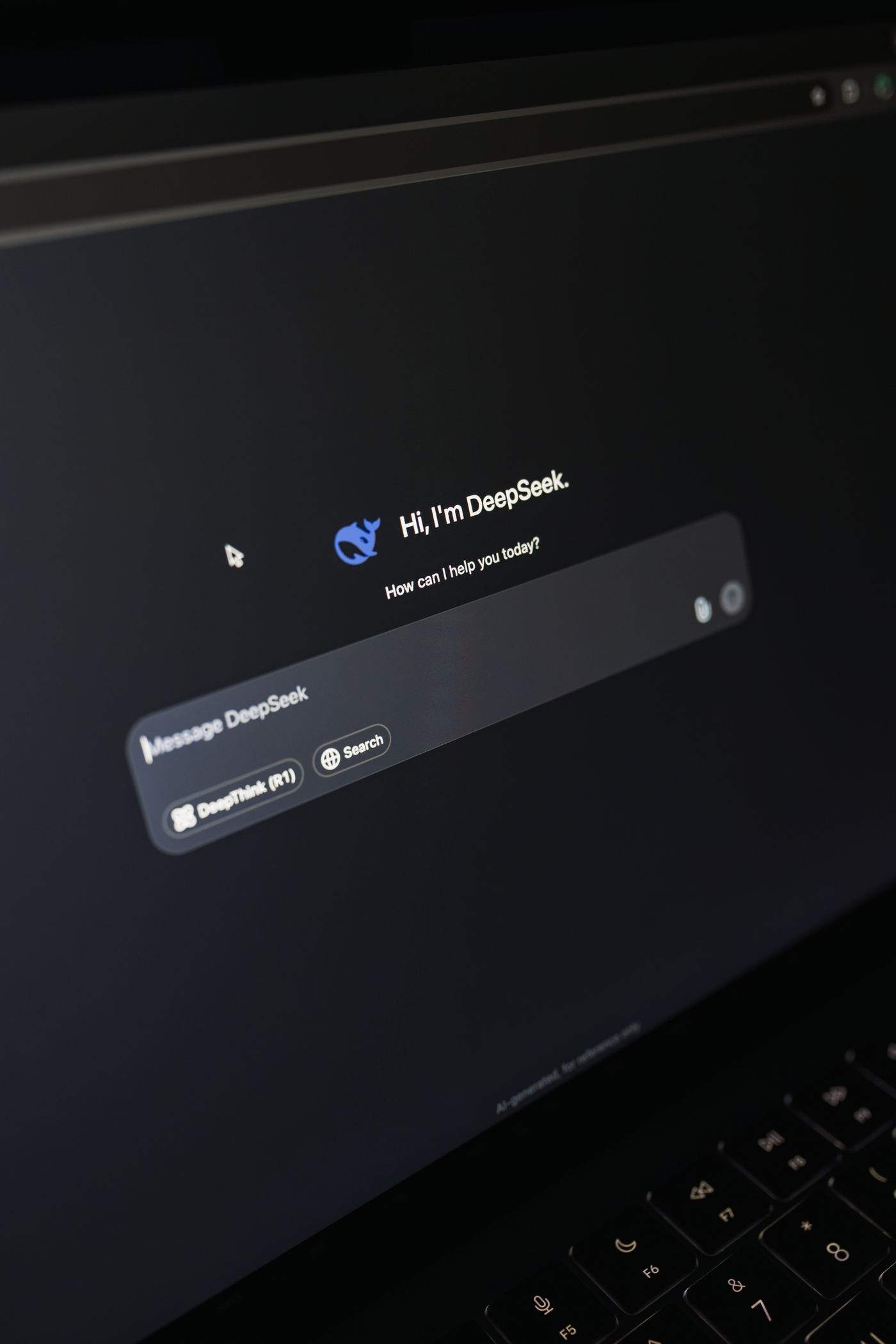
A sane first agent: chat interface → agent node with a clear system message → one read-only tool (a lookup, a search). Write the system message like a job description — narrow scope, explicit refusals — using the techniques from our prompt engineering guide. Then, before you ever give the agent a tool that changes anything (sending messages, editing records), use n8n's documented human-in-the-loop review: the workflow pauses, a reviewer sees exactly which tool the agent wants to call with which parameters, and approval or denial decides whether it executes. Check the feature's availability on your version and plan, then treat it as non-negotiable for destructive actions.
Model access is its own cost — an agent calling a commercial LLM bills through that provider regardless of where n8n runs. And if your ambitions grow toward connecting agents to many external systems, that is exactly the problem the Model Context Protocol standardizes; n8n's AI stack and MCP are complementary, not competitors. For the broader landscape of agent platforms beyond n8n, our AI agent builder comparison ranks the options, and the platform-agnostic method in our no-code agent guide applies here node for node. Developers who outgrow visual builders usually land on code-first stacks like the one in our Python agent tutorial.
Five Beginner Mistakes That Cost the Most
- Building without publishing. The workflow "worked in testing" and then never ran again — because it was never published. Publish, then check the executions list the next day.
- Hardcoding values that should be expressions. A date typed as text is correct exactly once. If a value depends on "now" or on previous data, it should be an expression.
- Testing against production data. Point your first version at a test sheet, a test channel, a scratch bin. Only after duplicate-safe behavior is proven do you switch destinations.
- One giant workflow. Ten small workflows that each do one job beat one workflow with forty nodes. Small workflows are testable, reusable, and survive partial failures.
- No failure plan. Decide up front where errors go — n8n supports dedicated error handling, and even a simple "send me a message when something fails" workflow beats silent breakage. An automation that fails loudly is a tool; one that fails silently is a liability. Slot this into the weekly review habit from our AI productivity workflow.
Frequently Asked Questions
Is n8n free to use?
The self-hosted Community edition is free software under n8n's Sustainable Use License — fine for internal business use, not for reselling hosted access. Your infrastructure and any external API/model costs remain real. n8n Cloud is a paid service with a free trial; displayed plans started at $20/month (annual billing) in mid-September 2026.
Can I run n8n locally on my own computer?
Yes. The documented one-line install (curl -fsSL https://get.n8n.io | sh) runs it at localhost:5678 on Linux, macOS, or WSL; Docker and npm installs are the standard routes elsewhere. A personal machine is great for learning, but anything that must run unattended belongs on an always-on server.
Do I need to know how to code?
Not to start. The first-workflow tutorial requires zero programming — you drag fields and fill forms. Expressions use small bits of JavaScript, and you can go far by copying documented patterns. Code nodes exist when you want them; they are optional, not an entry fee.
Is n8n better than Zapier?
Different trade-offs: n8n favors complex workflows, execution-based pricing, and self-hosting control; Zapier favors speed of setup and breadth of managed integrations. Our n8n vs Zapier comparison works through pricing math and decision criteria honestly.
How do I use AI agents in n8n?
Start with a chat trigger and an agent node, give it a tight system message, and attach one read-only tool. Add memory if the conversation needs context. Before any tool that changes external systems, configure human-in-the-loop approval so a person confirms each risky call.
Where do I find example workflows?
The template library linked from the editor (and published on n8n's site) is the official source — import, read every node, replace credentials, and adapt. Treat community templates as teaching material first and production tooling second.
Bottom Line
n8n rewards a specific approach: learn five concepts, build one small real workflow end to end, publish it, and only then scale up. Start on Cloud or locally — the skills are identical — keep credentials narrow, make re-runs duplicate-safe, and put human approval in front of any AI action you could not easily undo. Do that, and within a week n8n stops being "the technical automation tool" and becomes the place where your repetitive work quietly disappears.
Sources and Image Credits
Product facts were verified against n8n's official documentation — the first-workflow tutorial, key concept glossary, template docs, install options, and pricing — on September 15–16, 2026. Recheck live pages before purchasing; steps and plans change.
Illustrative photographs from Pexels: whiteboard flowchart, programmer at laptop, planning chart, project documents, and AI chat screen. They are not screenshots of the n8n product.
Share this article
Written by
Ali RehmanAuthor at ByteVerse
A Full Stack Developer and Tech Writer specializing in React.js, Next.js, and modern JavaScript, sharing insights on web development, frontend technologies, backend APIs, and scalable applications.
View all posts

